Choosing Daily Sun Protection
A sunscreen only protects your skin when it moves from the tube onto your face in sufficient quantity. Many people abandon daily photoprotection because their first bottle stung their eyes, left a chalky violet-white cast, or pilled over their morning moisturizer.
By decoding regional UV label standards and matching the filter vehicle to your skin type, you can lock in a comfortable morning step that makes every evening serum worthwhile.
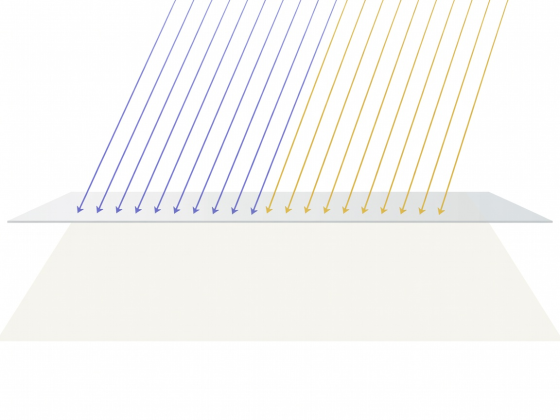
Figure 5.1 — Broad-spectrum coverage spans both burning UVB wavelengths and deep-penetrating UVA1/UVA2 rays.
Interactive Sunscreen Decision Checklist
Check the boxes that describe your daily conditions below to narrow down the ideal sunscreen vehicle and filter architecture for your routine ledger:
Select Your Daily Conditions
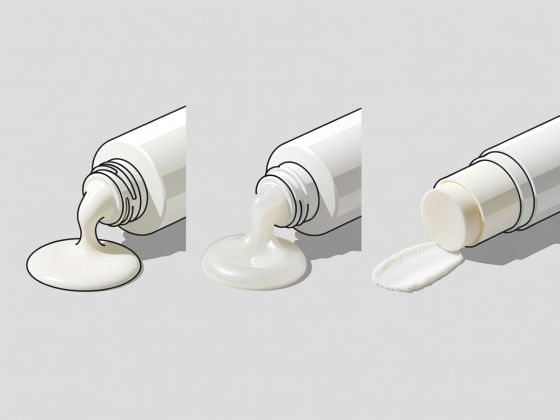
Figure 5.2 — Matching vehicle viscosity to your climate eliminates the urge to under-apply.
Decoding Global UV Label Standards
The Sun Protection Factor (SPF) number measures protection primarily against erythemogenic UVB radiation under ISO 24444 testing. To verify strong UVA protection (which prevents photoaging and melasma flares), look for these regional label marks:
| Label Marking | Regulatory / Testing Standard | What It Guarantees |
|---|---|---|
| Broad Spectrum SPF 30 / 50 | US FDA Monograph (Critical Wavelength ≥ 370 nm) | Confirms UV absorption extends into the long-wave UVA range with proportional scaling to SPF. |
| UVA inside a Circle | European Commission Recommendation / ISO 24443 | The UVA protection factor (UVA-PF) is at least one-third (1/3) of the labeled SPF value (e.g., SPF 60 has UVA-PF ≥ 20). |
| PA+++ / PA++++ | Japan Cosmetic Industry Association (JCIA) / Korea MFDS (ISO 24442 PPD) | Persistent Pigment Darkening rating; PA++++ indicates a UVA protection factor of 16 or higher. |
| Water Resistant (40 or 80 Minutes) | FDA / COLIPA Immersion Testing | Formula retains its stated SPF rating after 40 or 80 minutes of water immersion or heavy sweating. |
Mineral (Inorganic) vs. Organic Filter Families
Both inorganic and organic UV filters act predominantly by absorbing UV photons and converting that energy into harmless, imperceptible heat (mineral filters also scatter ~5–10% of incident rays):
-
Inorganic / Mineral Filters (Zinc Oxide & Titanium Dioxide) Photostable and exceptionally gentle around sensitive eyes and rosacea-prone skin. Because white mineral particles scatter visible light, untinted formulas can leave a pale cast on medium-to-deep skin tones (Fitzpatrick IV–VI); iron-oxide tinted mineral formulas blend far more naturally and add visible-light defense.
-
Classic & Modern Organic Filters Classic filters (Avobenzone, Homosalate, Octisalate, Octocrylene) offer completely clear wear, though Avobenzone can occasionally sting watery eyes. Newer high-molecular-weight filters used in EU, UK, Asian, and Australian sunscreens—such as Bis-Ethylhexyloxyphenol Methoxyphenyl Triazine (Bemotrizinol) and Diethylamino Hydroxybenzoyl Hexyl Benzoate (Uvinul A Plus)—deliver high photostability with minimal eye migration.

Figure 5.3 — Many people keep a water-resistant stick or mineral cream around the orbital bone and a sheer fluid across the rest of the face.